
What We Get Wrong About Toughness in Female Athletes
And how Alyssa Liu, Mikaela Shiffrin, and other young female champions are defining the new way ahead
One of the most common things coaches tell me is:
“We need our female athletes to be tougher.”
And I understand that instinct.
I’ve walked into rooms full of high-performance professionals - including elite military units and SWAT operators - where the language sounds almost identical:
“Toughen them up.”
“Make them harder.”
“Raise the standard.”
I’ve built my career working in environments where resilience isn’t theoretical. The stakes are real. The pressure is real. The consequences are real.
So yes, I know how to teach toughness.
But here’s what surprises people:
Even in those environments, toughness is not about suppressing emotion.
It’s about purpose.
It’s about mission.
It’s about intrinsic motivation.
It’s about knowing exactly why you’re doing what you’re doing.
Because when your “why” is ironclad, endurance becomes possible.
Toughness Is Philosophical, Not Emotional Suppression
In both rooms - Green Berets and teenage girls - the truth is the same:
Toughness without purpose collapses.
Toughness without self-trust fractures.
Toughness without identity stability turns brittle.
Real toughness is:
• Self-knowledge
• Self-regulation
• Purpose-driven endurance
• Trust in your preparation
• Trust in yourself
That’s not softness; it’s the psychological architecture that enables a sustainable pattern of elite performance.
When you listen to elite athletes speak, the pattern becomes clear.
Look at someone like Mikaela Shiffrin.
She has spoken openly about skiing for her father, and about how that connection fuels her resilience.
That “why” isn’t decorative; it’s structural.
Before heading home from the 2026 games in Milano Cortina, she shared a now-famous image of her Olympic mirror with a Post-it note reminding her to trust her skiing (see below).
At the highest level in the world, the message wasn’t:
“Be harder.”
“Shove it down.”
“Stop feeling.”
It was:
Trust yourself.
Trust your training.
Trust your preparation.
That is elite toughness at work.

The Cultural Evidence We Can’t Ignore
If we zoom out, we see something else happening culturally.
When Laurie Santos launched her “Psychology and the Good Life” course at Yale University, it quickly became the largest class in the university’s history.
Why?
Because some of the highest-performing students in the country were quietly overwhelmed.
Anxiety.
Perfectionism.
Pressure.
If our most accomplished young adults are flooding into well-being courses, we have to ask:
What cost are we paying for performance?
And what if the answer isn’t “lower the bar”?
What if the answer is:
Teach the infrastructure.
Girls Are Not Small Men in High-Performance Spaces
When coaches ask for tougher female athletes, they often mean they want more grit under pressure.
But adolescent girls are navigating something additional.
At the exact age when many girls drop out of organized sport, they are also:
• Becoming hyper-visible
• Being evaluated socially and physically
• Compared constantly online
• Objectified
• Overlooked
• Sometimes harassed
• Told who they should be
That context matters.
You cannot ignore those developmental and societal realities and simply say, “Be tougher.”
If we want girls to stay in sport - and not just stay, but thrive - we have to strengthen the internal foundations that determine whether pressure builds resilience or erodes identity.
What keeps a girl locked in and performing over this hump is not emotional suppression.
It is:
• Identity stability under evaluation
• Nervous system regulation under stress
• Autonomy over her path
• Intrinsic motivation
• Self-trust
• A sense of purpose that belongs to her
The Tiger Myth
The “battle of the tiger” model — push harder, demand more, suppress emotion — can absolutely produce results.
But it also produces collateral damage.
Anxiety.
Perfectionism.
Burnout.
Identity erosion.
You can get performance through fear and force.
But you don’t build whole, integrated adults that way.
And eventually, brittle systems break.
We’ve seen this play out publicly.
Consider Olympic Gold Medalist and World Champion figure skater, Alysa Liu.
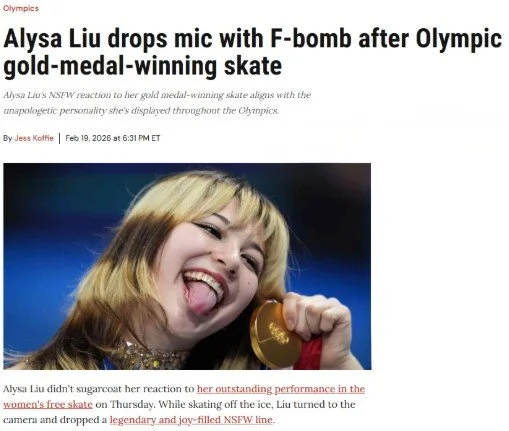
At the height of her success, she stepped away.
Not because she lacked talent or discipline, but because she needed to find herself outside the machinery of elite sport.
She left to recalibrate, and in doing so, she redefined the meaning of competition on her own terms.
And Alyssa Liu’s return to the ice felt so triumphant to us because when she came back, she did so anchored in joy and autonomy - not obligation. The picture of an embodied young woman in touch with herself and skating for herself.
That is not weakness.
That is sovereignty.
That is psychological maturity.
And it is no coincidence that the next generation of elite-performing young women are demanding exactly that.
We have raised girls who understand their worth.
They know their mental health and well-being matter.
They can feel that their self-efficacy and self-actualization matter.
They do not want to be commodified.
They do not want to be reduced to statistics, rankings, or recruiting potential.
They want to compete — but they want to compete as whole human beings.
This is not a sign of softness; it’s evolution.
And now it is up to us — as coaches and parents — to meet them there. Not by lowering standards, but by building the internal foundation that allows excellence to coexist with identity, autonomy, and joy.
Because that is the model of toughness that lasts.
I Am Not Here to Soften Athletes
Let me be clear:
I am not interested in softening athletes.
I am interested in strengthening their foundation.
I’ve spent ten years teaching mental skills to professionals whose careers carry extreme stress and real risk. The same psychological principles that protect elite operators from collapse under pressure apply to young female athletes.
Nearly all of them.
The difference is in how they must be framed and how they must be taught developmentally.
Toughness is not emotional numbness.
It is:
• Purpose
• Self-trust
• Regulation
• Alignment
• Intrinsic drive
Real toughness grows from clarity of purpose.
From identity stability.
From embodied regulation.
From trust in self.
Not from fear.
Not from shame.
Not from pressure alone.
You are not building toughness by hardening someone.
You are building toughness by stabilizing them.
And stabilized athletes outperform brittle ones.
Where This Leads
If we truly want young women to thrive in competitive sport - not just survive it - we must teach the psychological skills that make high performance sustainable.
That is the work of FLOURISH.
It is not about lowering standards or reducing ambition.
It is about building the infrastructure that allows ambition to endure.
Identity stability.
Nervous system regulation.
Intrinsic motivation.
Embodied self-trust.
When those elements are in place, performance strengthens.
More importantly, so does the person inside the uniform.
To learn more about FLOURISH - a comprehensive whole-athlete development program for high-performing female athletes and their families who are committed to pursuing excellence consciously - and to apply for a spot in our founding cohort, fill out this interest form and we will get back to you shortly.